
Retro nursery decor brings the warmth and personality of the past into a room designed for life today. Think rich wood tones, playful patterns, curved furniture, earthy color palettes, and collected details that make the nursery feel personal rather than overly themed. The key is balance: choose a few nostalgic elements, pair them with modern nursery furniture, and give each design choice room to stand out.
Whether your inspiration comes from mid-century interiors, 1970s color, vintage textiles, or the rooms you remember from childhood, these retro nursery ideas can help you create a comfortable, functional space that still feels fresh. Start with the larger furniture pieces, then layer in color, pattern, texture, and accessories to complete the look.
What Makes a Nursery Feel Retro?
Retro style is less about recreating one exact decade and more about combining recognizable design cues from the past. A mid-century nursery may lean into tapered legs, walnut finishes, and clean lines. A 1970s-inspired room may use rust, mustard, olive, checkerboard patterns, and plush textures. A softer vintage nursery might feature muted florals, woven accents, and collected wall art.
To keep the room cohesive, choose one direction as the foundation and use the others as accents. A warm wood crib can anchor the space, while wallpaper, a patterned glider, or a few colorful accessories provide the personality. This approach creates a nursery that feels nostalgic without looking like a themed set.
1. Start With Warm Wood Nursery Furniture
Warm woods are one of the easiest ways to establish a retro nursery. Walnut, chestnut, honey, and natural wood finishes add depth and warmth while pairing easily with both muted and saturated colors. They also bring a collected, furniture-like quality to the room that can feel more timeless than an all-white nursery.
Use the crib and dresser as the visual anchors. The Palma 4-in-1 Convertible Crib and Palma 7-Drawer Dresser in Natural Walnut create a polished mid-century foundation with rich color and clean lines. For a lighter contrast, the Sprout 4-in-1 Convertible Crib and coordinating 6-Drawer Dresser combine chestnut and natural tones for a layered look.
Once the larger pieces are in place, repeat the wood tone in smaller details such as picture frames, a floor lamp, curtain hardware, or woven storage. The finishes do not need to match perfectly. Slight variation can make the room feel collected over time rather than purchased all at once.
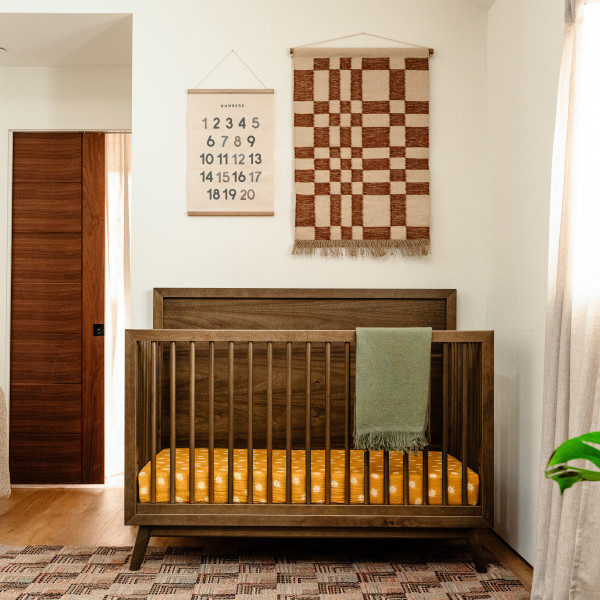
Featuring: Palma 4-in-1 Crib in Natural Walnut
2. Choose a Retro Nursery Color Palette
A focused color palette helps retro nursery decor feel intentional. Start with two or three main colors, then add a neutral that gives the room space to breathe. Rust, mustard, olive, walnut brown, cream, dusty blue, soft blush, and muted teal all work well in nostalgic spaces.
For a warmer room, pair natural walnut furniture with rust and mustard accents. For something calmer, combine chestnut wood with cream, olive, and dusty blue. A playful nursery can use a neutral furniture base with brighter accents in coral, golden yellow, or soft green.
These palettes can also be adapted to different nursery directions without relying on rigid color rules. A vintage-inspired boy nursery might pair walnut or chestnut furniture with dusty blue, olive, rust, or classic stripes. A vintage-inspired girl nursery could combine warm wood with blush, coral, muted florals, or soft botanical prints. For a gender-neutral vintage nursery, cream, mustard, olive, muted teal, and natural wood create a versatile foundation that can evolve with the room.
Color does not need to cover every wall. Introduce it through a painted accent wall, removable wallpaper, a rug, curtains, a glider, or framed artwork. Repeating the same color in two or three places helps connect the room without making every item match.
3. Layer in Playful Prints and Patterns
Patterns are where a retro nursery can become more personal. Checkerboard, gingham, stripes, geometric shapes, abstract forms, and small-scale florals can all evoke a vintage feel. Choose one statement pattern and support it with simpler designs so the room remains comfortable and easy to live in.
Wallpaper can create an immediate focal point behind a dresser or on one wall. A patterned area rug provides similar impact with less permanence. Curtains, fitted crib sheets, and framed prints are useful for smaller doses of pattern. Babyletto prints such as Golden Hour, Terrazzo, and Terracotta Rainbow can bring nostalgic color and movement into the room while coordinating with warm wood furniture.
4. Add Curved and Textured Seating
Curved silhouettes and tactile fabrics help soften the straight lines of cribs, dressers, and shelving. They also reference the rounded forms and plush upholstery commonly found in mid-century and 1970s interiors.
A nursery glider can carry much of this design work on its own. The Madison Glider combines a rounded shape with a graphic checker texture, while the Poe Channeled Swivel Glider in Rust Velvet introduces both saturated color and vertical channeling. Either can function as a statement piece while still serving an everyday purpose.
Complete the seating area with a floor lamp, small side table, and a basket for books or feeding essentials. A decorative pillow or throw can add another layer of color on adult seating, but keep loose decorative items out of the infant sleep space and follow current safe-sleep guidance.
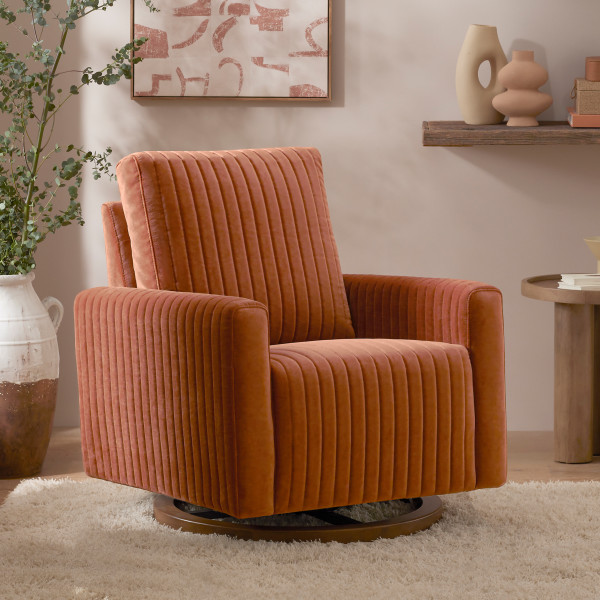
Featuring: Poe Channeled Swivel Glider in Rust Velvet
5. Style With Vintage-Inspired Wall Art and Accessories
Accessories make the nursery feel personal, but they do not need to come from one collection. Look for artwork and objects that share a color palette or visual theme, such as abstract shapes, alphabet prints, animals, botanicals, stars, travel imagery, or simple geometric designs.
Create a small gallery wall above a dresser, style a shelf with framed art and board books, or hang one larger piece where it can stand on its own. Woven baskets, ceramic lamps, fabric pennants, mobiles, and sculptural objects can contribute to the retro feeling without overwhelming the room.
This is also a natural place to include family history. A framed illustration, childhood book, or photograph can add genuine nostalgia. Keep fragile, heavy, or corded items secured and positioned away from the crib and changing area.
6. Use Rugs, Lighting, and Textiles to Finish the Room
The finishing layers are what turn a furniture layout into a complete room. A rug can introduce pattern, define the seating area, and soften the floor. Look for geometric, striped, checkerboard, or muted floral designs that echo the room’s main colors.
Lighting can also reinforce the style. Consider a globe-shaped lamp, a pleated shade, a simple wood floor lamp, or a warm metal finish. Window treatments in cream, rust, olive, or a subtle print can frame the room and repeat the palette without competing with the furniture.
Use storage as part of the design. Woven baskets, canvas bins, and low shelving keep everyday items accessible while adding texture. The goal is not to fill every surface. Leave some open space so the strongest retro elements remain visible.
7. Balance Retro Style With Modern Function
A successful retro nursery should look distinctive while still working for daily routines. Prioritize a clear path between the crib, dresser or changing area, and glider. Choose storage that keeps frequently used items within reach, and select furniture that can continue serving the family as the child grows.
Modern Babyletto furniture provides the practical foundation, while color, pattern, art, and accessories create the nostalgic character. This balance helps the room feel warm and collected without sacrificing function or relying on truly old nursery furniture that may not meet current expectations.
When the room is complete, step back and remove anything that feels repetitive. One warm wood finish, one statement pattern, and a consistent color palette are often enough to communicate the retro look.